


Hey there! As a supplier of water control valves, I often get asked if our valves can be used in water purification systems. Well, the short answer is yes, and in this blog, I'm gonna dive deep into why and how water control valves play a crucial role in these systems.

First off, let's understand what a water purification system does. Its main job is to remove contaminants and impurities from water, making it safe for various uses, whether it's for drinking, industrial processes, or even in swimming pools. There are different stages in a purification system, like filtration, disinfection, and sometimes reverse osmosis. And at each of these stages, water control valves are super important.
One of the key functions of water control valves in a purification system is to regulate the flow of water. You see, different purification processes require a specific flow rate. For example, during the filtration stage, if the water is flowing too fast, the filters might not be able to trap all the impurities effectively. On the other hand, if the flow is too slow, it can slow down the entire purification process. That's where water control valves come in. They can be adjusted to maintain the ideal flow rate, ensuring that the purification system works at its best.
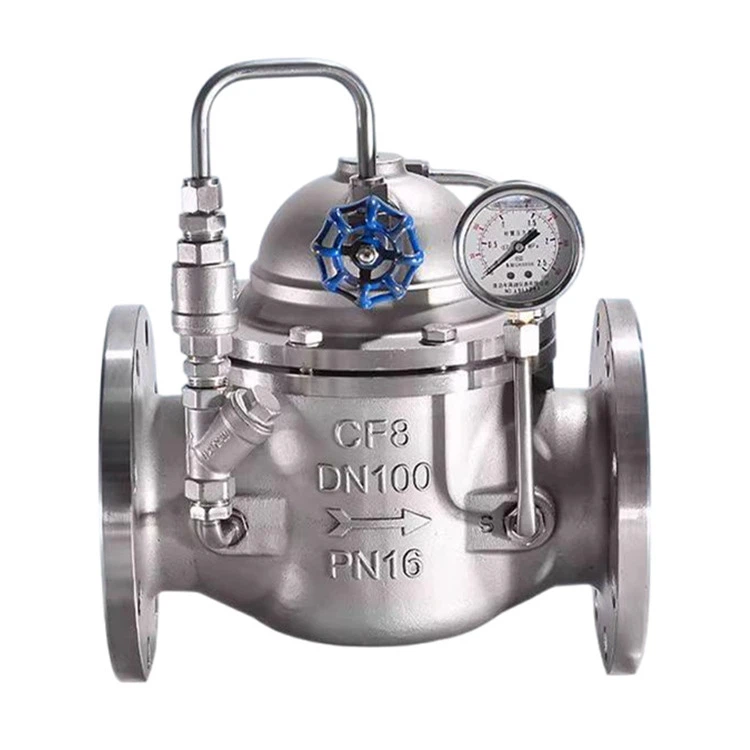
Let's talk about pressure control. Water pressure is another critical factor in a water purification system. High pressure can damage the components of the system, like the membranes in a reverse osmosis unit. Low pressure, on the other hand, might not be sufficient to push the water through the filters or other purification mechanisms. A 200X Pressure Reducing Valve is a great example of a valve that can help with this. It can reduce the incoming water pressure to a safe and optimal level for the purification system, protecting the equipment and ensuring consistent performance.
Another important aspect is preventing backflow. Backflow can contaminate the clean water that has already gone through the purification process. A 300X Stainless Steel Slow-Closing Check Valve or a 300X Slow-Closing Non-Return Valve can be used to prevent this. These valves allow water to flow in one direction only, and in case of a change in flow direction, they close slowly to prevent water hammer and other issues.
Now, let's consider the different types of water purification systems. There are small-scale residential systems, which are usually used for drinking water. These systems often have simple setups, but they still need reliable water control valves. For example, a small pressure-reducing valve can be used to ensure that the water pressure in the house is safe for the purification unit.
On the other hand, large-scale industrial water purification systems are much more complex. They might involve multiple stages of purification, large volumes of water, and high-pressure operations. In these systems, water control valves need to be more robust and precise. They might need to be able to handle high flow rates, extreme pressures, and different types of water contaminants.
When it comes to choosing the right water control valve for a water purification system, there are a few things to consider. First, the material of the valve is important. Since the valve will be in contact with water, it needs to be made of a material that is resistant to corrosion and chemical damage. Stainless steel is a popular choice because it's durable and can withstand the harsh conditions in a purification system.
The size of the valve also matters. It needs to be sized correctly to handle the flow rate and pressure requirements of the specific purification system. If the valve is too small, it can restrict the flow and cause problems. If it's too large, it might not be able to control the flow accurately.
The type of valve is another factor. There are different types of water control valves, such as ball valves, gate valves, and diaphragm valves. Each type has its own advantages and disadvantages, and the choice depends on the specific needs of the purification system. For example, ball valves are easy to operate and can provide a tight seal, making them suitable for on-off control. Diaphragm valves, on the other hand, are good for precise flow control and can handle abrasive or corrosive fluids.
As a water control valve supplier, I've seen firsthand how important these valves are in water purification systems. We offer a wide range of valves that are designed to meet the different needs of our customers. Whether you're looking for a valve for a small residential system or a large industrial one, we've got you covered.
If you're in the process of setting up a water purification system or looking to upgrade your existing one, I encourage you to get in touch with us. Our team of experts can help you choose the right water control valves for your specific requirements. We can also provide technical support and advice to ensure that your purification system works efficiently and effectively.
In conclusion, water control valves are an essential part of any water purification system. They help regulate the flow, control the pressure, and prevent backflow, ensuring that the system works properly and produces clean, safe water. So, if you're in the market for water control valves for your purification system, don't hesitate to reach out. We're here to help you make the right choice and keep your water purification system running smoothly.
References
- Water Treatment Handbook by Lenntech
- Principles of Water Treatment by American Water Works Association


