


Fluid velocity plays a crucial role in the performance and operation of non - rising valves. As a supplier of Non Rising Valve, understanding these influences is essential for providing high - quality products and valuable advice to our customers. In this blog, we will explore in detail how fluid velocity impacts non - rising valves.
1. Basic Principles of Non - Rising Valves
Before delving into the influence of fluid velocity, it is necessary to understand the basic structure and working principle of non - rising valves. A Gate Valve Non Rising is a type of valve where the stem does not rise out of the valve body when the valve is opened or closed. Instead, the gate moves up and down within the valve body. This design is particularly useful in applications where vertical space is limited, such as in underground pipelines or confined mechanical spaces.
The main function of a non - rising valve is to control the flow of fluid by opening or closing the passageway. When the valve is fully open, the gate is lifted to allow the fluid to pass through freely. When the valve is closed, the gate blocks the passage, preventing the flow of fluid.
2. Impact of Fluid Velocity on Valve Operation
2.1. Pressure Drop
One of the most significant impacts of fluid velocity on non - rising valves is the pressure drop across the valve. As the fluid velocity increases, the pressure drop also increases. This is based on Bernoulli's principle, which states that in a fluid flow, an increase in velocity is accompanied by a decrease in pressure.
In non - rising valves, a high fluid velocity can cause a large pressure drop, which may lead to several problems. Firstly, it can increase the energy consumption required to pump the fluid through the valve. Higher pressure drops mean that the pump has to work harder to maintain the desired flow rate, resulting in increased operating costs. Secondly, excessive pressure drops can cause cavitation in the valve. Cavitation occurs when the local pressure in the fluid drops below the vapor pressure, leading to the formation and collapse of vapor bubbles. The collapse of these bubbles can cause damage to the valve components, such as the gate and the valve seat, reducing the valve's lifespan and performance.
2.2. Erosion and Wear
Fluid velocity also has a direct impact on the erosion and wear of non - rising valves. High - velocity fluids carry more kinetic energy, which can cause the fluid to act like a sandblaster on the valve surfaces. The gate and the valve seat are particularly vulnerable to erosion and wear.
When the fluid velocity is high, the particles and impurities in the fluid can impact the valve surfaces at high speeds, gradually wearing away the material. This can lead to a loss of valve tightness, allowing leakage to occur. In severe cases, erosion can cause structural damage to the valve, making it inoperable. The rate of erosion is proportional to the square or even the cube of the fluid velocity in some cases. Therefore, even a small increase in fluid velocity can significantly accelerate the erosion process.
2.3. Vibration and Noise
Another consequence of high fluid velocity is the generation of vibration and noise in non - rising valves. As the fluid flows through the valve at high speeds, it can cause turbulent flow patterns, which in turn lead to vibration. The vibration can be transmitted to the surrounding piping and equipment, causing additional stress and potential damage.
Moreover, the vibration and turbulent flow can produce noise. Excessive noise not only creates an unpleasant working environment but can also be an indication of potential problems within the valve. For example, if the valve is not properly designed or installed, high - velocity fluid flow can cause resonance, which can amplify the vibration and noise levels.
3. Design Considerations Based on Fluid Velocity
3.1. Valve Sizing
Proper valve sizing is crucial to ensure that the non - rising valve can operate effectively under different fluid velocities. When selecting a valve, it is necessary to consider the expected fluid velocity in the pipeline. A valve that is too small for the flow rate will result in high fluid velocities, leading to the problems mentioned above. On the other hand, a valve that is too large may be more expensive and may not provide accurate flow control.
Engineers typically use flow rate and pressure drop calculations to determine the appropriate valve size. By considering the maximum and minimum expected fluid velocities, they can select a valve that can handle the flow conditions without causing excessive pressure drops, erosion, or vibration.
3.2. Material Selection
The choice of valve materials is also influenced by the fluid velocity. For applications with high - velocity fluids, more wear - resistant materials should be used. For example, stainless steel or alloy materials can be used for the gate and the valve seat to reduce the impact of erosion and wear.

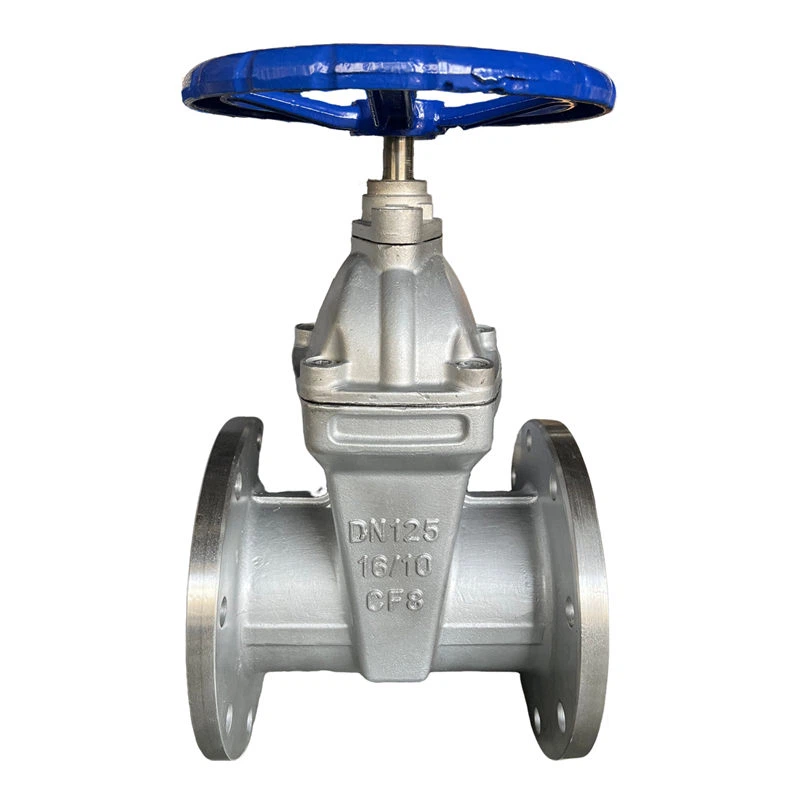
In addition, the material's ability to withstand cavitation should also be considered. Some materials are more resistant to cavitation damage than others. By selecting the appropriate materials, the valve's lifespan can be extended, and its performance can be improved.
3.3. Flow - Guiding Design
To reduce the negative impact of high - velocity fluid flow, non - rising valves can be designed with flow - guiding features. These features can help to smooth the fluid flow, reduce turbulence, and minimize the pressure drop. For example, the valve body can be designed with a streamlined shape, and internal baffles or vanes can be added to guide the fluid flow.
4. Monitoring and Maintenance in Relation to Fluid Velocity
4.1. Monitoring
Regular monitoring of fluid velocity and other operating parameters is essential for ensuring the proper operation of non - rising valves. By installing flow meters and pressure sensors in the pipeline, the fluid velocity and pressure drop across the valve can be measured. Any significant changes in these parameters can indicate potential problems, such as valve wear, blockage, or improper operation.
In addition, vibration and noise sensors can be used to detect abnormal vibration and noise levels. If the vibration or noise exceeds the normal range, it may be necessary to inspect the valve for damage or misalignment.
4.2. Maintenance
Based on the monitoring results, appropriate maintenance measures should be taken. For valves operating under high - velocity conditions, more frequent inspections are required. The valve components should be checked for erosion, wear, and damage regularly. If any problems are found, the damaged components should be replaced in a timely manner.
In addition, the valve should be cleaned regularly to remove any deposits or debris that may affect its performance. Lubrication of the valve stem and other moving parts is also important to ensure smooth operation.
5. Conclusion and Call to Action
In conclusion, fluid velocity has a profound influence on the performance, operation, and lifespan of non - rising valves. High fluid velocities can cause pressure drops, erosion, wear, vibration, and noise, which can lead to various problems such as increased energy consumption, leakage, and structural damage.
As a professional supplier of Non Rising Valve and Gate Valve Non Rising, we have the expertise and experience to provide high - quality valves that can withstand different fluid velocity conditions. We offer a wide range of valve products with various sizes, materials, and designs to meet the specific needs of our customers.
If you are in need of non - rising valves for your projects, or if you have any questions about the influence of fluid velocity on valve performance, please feel free to contact us. Our team of experts is ready to provide you with professional advice and solutions. Let's work together to ensure the efficient and reliable operation of your fluid systems.
References
- Crane Co., "Flow of Fluids Through Valves, Fittings, and Pipe", Technical Paper No. 410.
- Streeter, V. L., and Wylie, E. B., "Fluid Mechanics", McGraw - Hill Book Company.
- Idelchik, I. E., "Handbook of Hydraulic Resistance", Begell House Inc.


