


A ball valve is a type of quarter - turn valve that uses a hollow, perforated, and pivoting ball to control the flow of a liquid or gas. In this blog, as a ball valve supplier, I'll provide a comprehensive overview of ball valves, including their structure, working principles, types, applications, and advantages.
Structure of a Ball Valve
The main components of a ball valve include the valve body, the ball, the stem, and the seats. The valve body is the outer casing that houses all the internal parts. It is designed to withstand the pressure and temperature of the fluid flowing through it. The ball is the key element in a ball valve. It has a hole (bore) through the center. When the valve is open, the bore aligns with the flow path, allowing the fluid to pass through. When the valve is closed, the ball is rotated 90 degrees so that the solid part of the ball blocks the flow path.
The stem connects the ball to the actuator (such as a handle or a motor). When the actuator is turned, the stem rotates the ball. The seats are located on either side of the ball. They provide a seal to prevent leakage when the valve is closed. Seats can be made from various materials, such as PTFE (polytetrafluoroethylene), which offers excellent chemical resistance and low friction.
Working Principles
The operation of a ball valve is relatively straightforward. It is a quarter - turn valve, which means that a 90 - degree rotation of the actuator (handle or motor) is all that is required to open or close the valve. When the handle is turned parallel to the pipe, the bore in the ball aligns with the flow path, and the valve is in the open position, allowing fluid to flow freely. When the handle is turned perpendicular to the pipe, the solid part of the ball blocks the flow path, and the valve is closed, stopping the flow of fluid.
Types of Ball Valves
There are several types of ball valves available in the market, each with its own characteristics and applications.
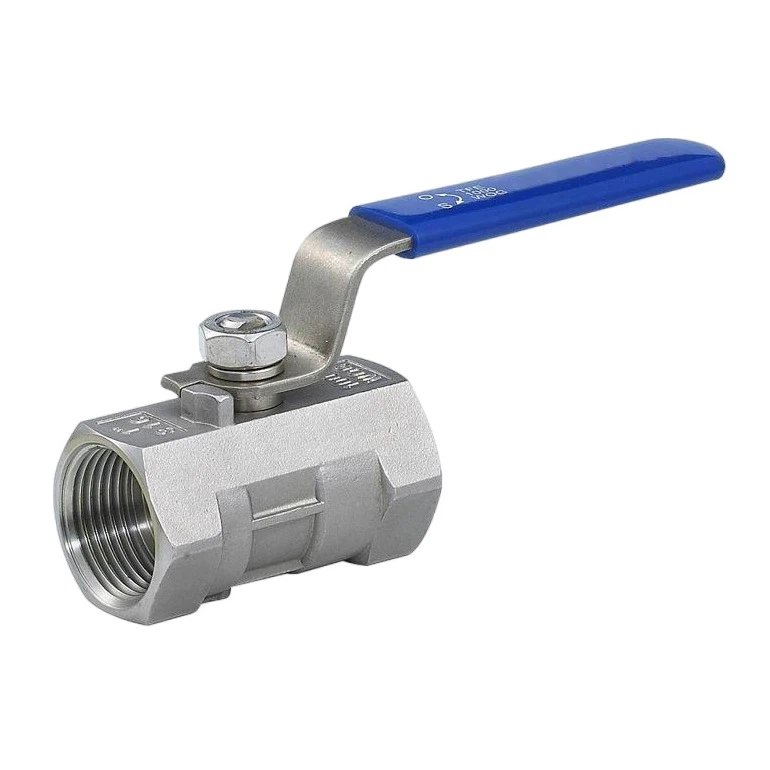
One - piece Ball Valve
A One - piece Ball Valve is the simplest and most cost - effective type of ball valve. It is made from a single piece of material, which makes it very compact and lightweight. One - piece ball valves are typically used in applications where the valve does not need to be disassembled for maintenance. They are commonly used in low - pressure and low - flow applications, such as in household plumbing systems.
Two - piece Ball Valve
A Two - piece Ball Valve consists of two parts that are bolted or threaded together. This design allows for easier disassembly and maintenance compared to one - piece ball valves. Two - piece ball valves are suitable for a wide range of applications, including industrial and commercial settings. They can handle higher pressures and flows than one - piece ball valves.
Stainless Steel Flanged Ball Valve CF8/CF8M/CF3M
Stainless Steel Flanged Ball Valve CF8/CF8M/CF3M is a type of ball valve that uses flanges to connect to the pipeline. These valves are made from stainless steel, which provides excellent corrosion resistance. CF8, CF8M, and CF3M are different grades of stainless steel, with varying levels of corrosion resistance and mechanical properties. Stainless steel flanged ball valves are commonly used in industries such as chemical processing, food and beverage, and water treatment, where corrosion resistance is crucial.
Applications of Ball Valves
Ball valves are widely used in various industries due to their reliable performance and ease of operation.
Oil and Gas Industry
In the oil and gas industry, ball valves are used in pipelines to control the flow of crude oil, natural gas, and refined products. They are also used in refineries and petrochemical plants for various processes, such as distillation, cracking, and blending. Ball valves can handle high pressures and temperatures, making them suitable for the harsh conditions in the oil and gas industry.
Water Treatment
Ball valves play an important role in water treatment plants. They are used to control the flow of water, chemicals, and sludge. For example, ball valves can be used to regulate the flow of chlorine into the water for disinfection purposes. They are also used in the distribution of treated water to consumers.
Chemical Processing
In the chemical processing industry, ball valves are used to control the flow of various chemicals. They need to be made from materials that are resistant to the corrosive effects of chemicals. Stainless steel and PTFE - lined ball valves are commonly used in chemical processing applications.
HVAC Systems
Heating, ventilation, and air - conditioning (HVAC) systems also use ball valves. They are used to control the flow of water or refrigerant in the system. Ball valves in HVAC systems help to regulate the temperature and pressure, ensuring efficient operation of the system.
Advantages of Ball Valves
There are several advantages to using ball valves in various applications.
Quick Operation
As mentioned earlier, ball valves are quarter - turn valves, which means they can be opened or closed quickly. This is especially useful in applications where rapid shut - off is required, such as in emergency situations.
Good Sealing Performance
The design of the ball and seats in a ball valve provides excellent sealing performance. When the valve is closed, the seats form a tight seal around the ball, preventing leakage. This is crucial in applications where leakage can cause safety hazards or environmental problems.

Low Friction
Ball valves have low friction, which means that less force is required to operate them. This makes them easy to open and close, even in large - diameter valves. Low friction also reduces wear and tear on the valve components, increasing the lifespan of the valve.
Wide Range of Sizes and Materials
Ball valves are available in a wide range of sizes, from small valves used in household plumbing to large valves used in industrial pipelines. They can also be made from various materials, such as brass, stainless steel, and PVC, to suit different applications.
Contact for Purchase and Negotiation
If you are in the market for high - quality ball valves, we are here to help. As a professional ball valve supplier, we offer a wide range of ball valves to meet your specific needs. Whether you need a one - piece ball valve for a small - scale project or a stainless steel flanged ball valve for an industrial application, we have the right solution for you.
We are committed to providing our customers with the best products and services. Our team of experts can assist you in selecting the most suitable ball valve for your application, and we can also offer competitive prices and flexible delivery options. If you are interested in purchasing ball valves from us, please feel free to contact us for further negotiation.
References
- "Valve Handbook" by J. Paul Tullis
- "Industrial Valves: Selection and Sizing" by Robert A. Gaylord


