


Hey there! As a supplier of wafer check valves, I often get asked if these valves are suitable for food and beverage applications. Well, let's dive right into it and explore this topic in detail.
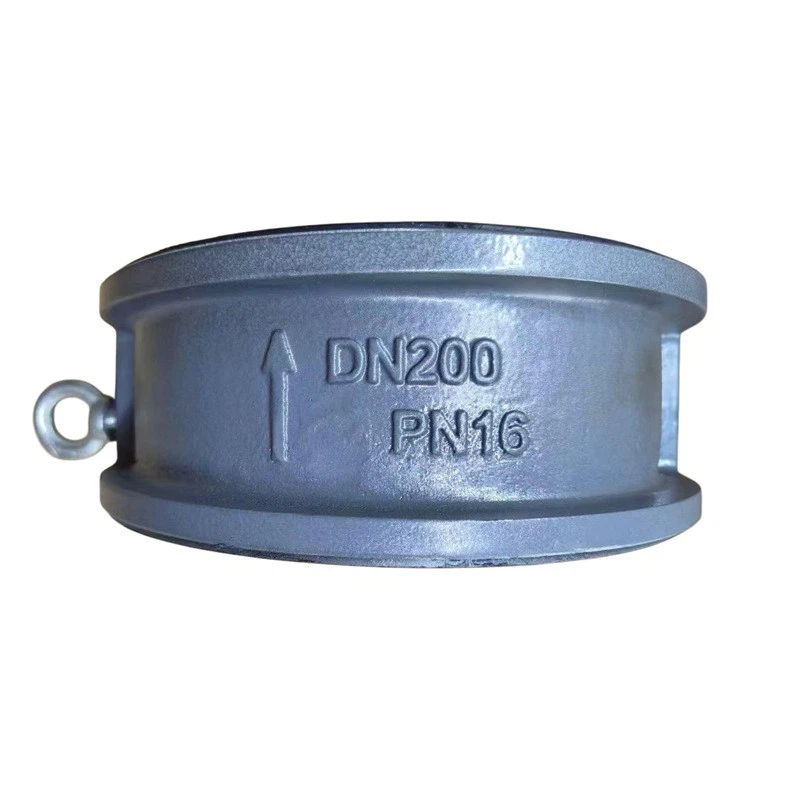
First off, what exactly is a wafer check valve? It's a type of valve that allows fluid to flow in one direction only. It's designed to prevent backflow, which is crucial in many industrial processes, including those in the food and beverage industry. Wafer check valves are compact, lightweight, and easy to install between flanges, making them a popular choice for various applications.
Now, let's talk about why wafer check valves might be a good fit for food and beverage applications. One of the key advantages is their ability to prevent contamination. In the food and beverage industry, maintaining hygiene and preventing the backflow of fluids is of utmost importance. A wafer check valve ensures that the product flows in the intended direction, reducing the risk of cross - contamination.
Another benefit is their durability. We offer different types of wafer check valves, such as the Carbon Steel Fully Lined EPDM Wafer Check Valve. The EPDM lining provides excellent resistance to corrosion and is compatible with a wide range of food and beverage products. This means that the valve can withstand the harsh conditions often found in food processing plants, such as exposure to acids, alkalis, and high - temperature liquids.
The Stainless Steel Hard - Seal Wafer Check Valve is also a great option. Stainless steel is known for its hygienic properties and resistance to rust and corrosion. It's a material commonly used in the food and beverage industry because it's easy to clean and doesn't react with food products. The hard - seal design ensures a tight closure, preventing any leakage and maintaining the integrity of the product flow.
Our CS Wafer Check Valve is also suitable for certain food and beverage applications. Carbon steel is a strong and cost - effective material. With proper coatings and treatments, it can be made resistant to corrosion and suitable for use in less aggressive food and beverage environments.
However, it's not all rosy. There are some considerations when using wafer check valves in food and beverage applications. One of the main concerns is the material compatibility. Different food and beverage products have different chemical compositions, and the valve material must be carefully selected to ensure that it doesn't react with the product. For example, some acidic beverages may require a valve with a more corrosion - resistant lining.
Another aspect is the ease of cleaning. In the food and beverage industry, regular cleaning and sanitization are essential to prevent the growth of bacteria and other microorganisms. The design of the wafer check valve should allow for easy disassembly and cleaning. Some valves may have complex internal structures that can trap food particles, making them difficult to clean thoroughly.

The flow characteristics of the valve are also important. In food and beverage processing, maintaining a consistent flow rate is crucial. A wafer check valve with a high - pressure drop or uneven flow characteristics can affect the quality and efficiency of the production process.
So, are wafer check valves suitable for food and beverage applications? The answer is yes, but with some caveats. When properly selected and maintained, they can offer many benefits in terms of preventing backflow, ensuring hygiene, and providing durability.
If you're in the food and beverage industry and looking for a reliable wafer check valve solution, we're here to help. We have a team of experts who can assist you in choosing the right valve for your specific application. Whether you need a valve for a small - scale artisanal food production or a large - scale beverage manufacturing plant, we've got you covered.
Don't hesitate to reach out to us for more information and to start a procurement discussion. We're eager to work with you to find the best valve solution for your business.
References
- Perry, R. H., & Green, D. W. (Eds.). (2008). Perry's Chemical Engineers' Handbook. McGraw - Hill.
- ASME BPE Standard (Bioprocessing Equipment). The American Society of Mechanical Engineers.


