Cast Steel Gate Valve
The cast steel gate valve is an industrial isolation valve engineered for pipelines that require reliable, bidirectional shutoff of the process medium. Featuring a cast steel pressure-containing body and an Outside Screw and Yoke (OS&Y) rising stem arrangement, the gate moves perpendicular to the flow path. This provides a positive shutoff when fully closed and a straight-through, low-pressure-drop passage when fully open.
-
![Cast Steel Gear Operated Gate Valve]() Cast Steel Gear Operated Gate ValveThe cast steel gear operated gate valve is an industrial isolation valve engineered for reliable full-bore shut-off in high-pressure and high-temperature pipeline systems. Equipped with a heavy-duty
-
![Low Temperature Cast Steel Gate Valve]() Low Temperature Cast Steel Gate ValveThe low temperature cast steel gate valve is an industrial isolation valve engineered specifically for piping systems operating under sub-zero service conditions. Utilizing low-temperature-rated cast
-
![Butt Weld Ends Cast Steel Gate Valve]() Butt Weld Ends Cast Steel Gate ValveCast steel gate valves with butt weld ends are engineered for permanent integration into industrial process and pipeline systems. Designed primarily for isolation service, these valves ensure
-
![Class 300 Cast Steel Flexible Wedge Gate Valve]() Class 300 Cast Steel Flexible Wedge Gate ValveThe class 300 cast steel flexible wedge gate valve is an industrial isolation valve engineered for full-open and full-closed service in critical process and pipeline systems. It features a robust
-
![Class 150 Cast Steel Flanged Gate Valve]() Class 150 Cast Steel Flanged Gate ValveThe class 150 cast steel flanged gate valve is a heavy-duty industrial isolation valve engineered for reliable full-open or full-closed service in ASME-compliant piping systems. Manufactured in
-
![API 600 WCB Cast Steel Gate Valve]() API 600 WCB Cast Steel Gate ValveThe API 600 WCB cast steel gate valve is a heavy-duty isolation valve designed for demanding applications in oil and gas, petroleum refining, petrochemical, power generation, and industrial process


Key Features
Cast Steel Pressure Boundary:
Heavy-duty body cast from carbon steel (WCB standard) or alloy steel to withstand specified temperature and pressure ratings.
Rising Stem (OS&Y) Design:
External stem threading allows easy visual inspection of valve position and external lubrication, protecting threads from process media.
Hard-Sealed Construction:
Precision metallic seating surfaces (with optional Stellite hardfacing) handle high-pressure, thermal-cycling, or abrasive process environments.
Low Flow Resistance:
Full-port interior profile minimizes pressure drop across the pipeline when the valve is in the fully open position.
Flexible Actuation Options:
Standard manual handwheel can be replaced with a bevel gearbox, pneumatic actuator, or electric actuator based on line size and differential pressure requirements.
Project-Specific Connections:
Available in Flanged (RF, RTJ) or Butt-Welded (BW) configurations to match pipeline system requirements.
Technical Specifications
|
Parameter |
Options / Standard Range |
|
Valve Type |
Cast Steel Gate Valve (Rising Stem / OS&Y) |
|
Nominal Size Range |
DN50 – DN1200 / 2 inch – 48 inch |
|
Pressure Ratings |
ASME Class 150, Class 300, Class 600, Class 900, Class 1500 / PN16 – PN250 |
|
Body Materials |
ASTM A216 WCB (Standard), LCC, LCB, WC6, WC9 |
|
Trim Materials |
API 600 Trim 1, Trim 5, Trim 8 (Stellite), Trim 10, or custom alloys |
|
Seating / Closure |
Metal-to-Metal Hard-Seated / Flexible or Solid Wedge |
|
Design Standards |
API 600, ASME B16.34, ISO 10434, BS 1414 |
|
Face-to-Face Standard |
ASME B16.10, ISO 5752 |
|
End Connections |
Flanged (ASME B16.5 / B16.47), Butt-Welded (ASME B16.25) |
|
Service Application |
On-Off Isolation |
|
Operation Methods |
Handwheel, Bevel Gearbox, Electric Actuator, Pneumatic Actuator |
|
Inspection & Testing |
API 598, ISO 5208, EN 12266-1 |
|
Quality & Certification |
ISO 9001 Facility Certification, MTR to EN 10204 3.1 |
Valve Design and Construction Details
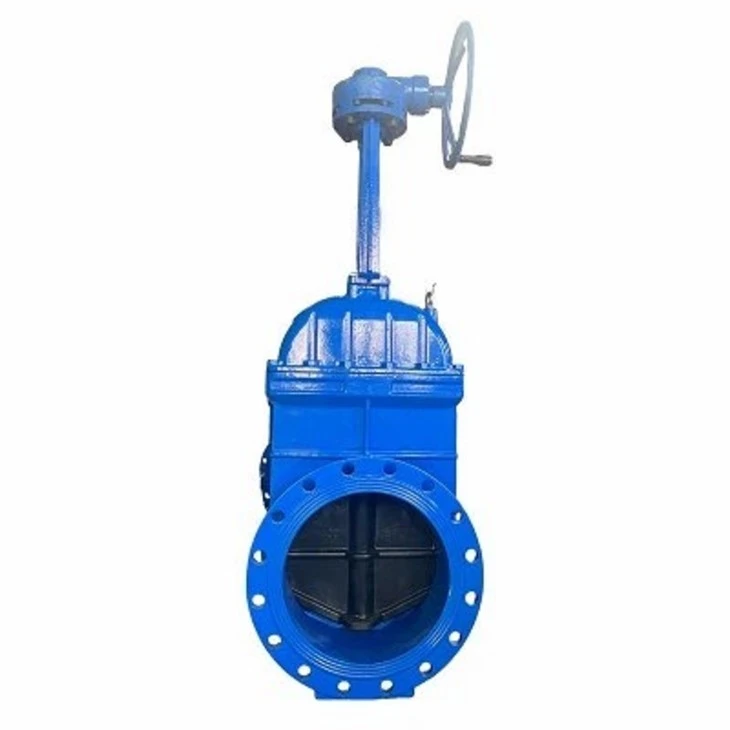
Body and Bonnet:
The cast steel body forms the primary pressure boundary. A bolted-bonnet (BB) design allows straightforward internal maintenance. Spiral-wound gaskets or ring joint gaskets are selected based on class rating.
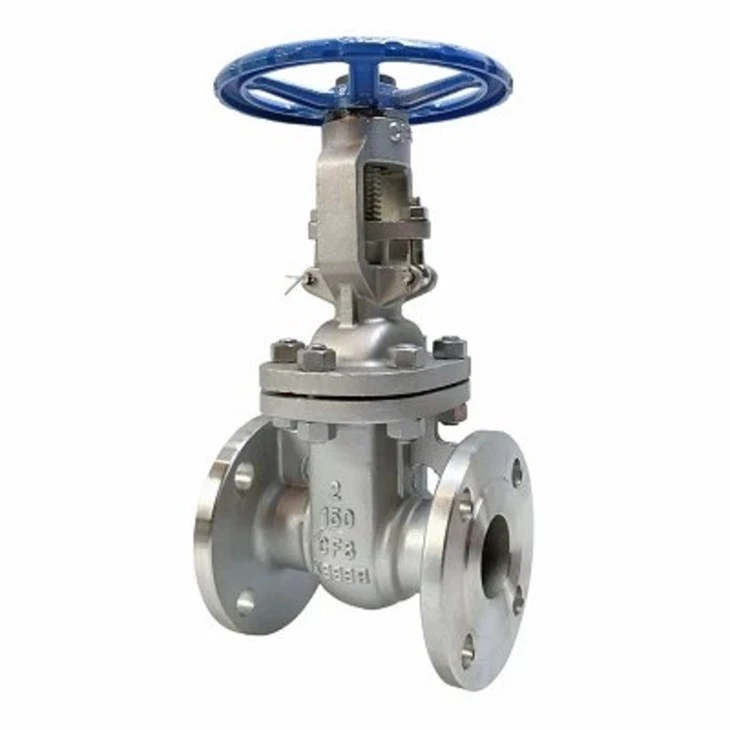
Wedge Gate:
Flexible wedges are provided as standard to compensate for minor seat deformation caused by thermal expansion or piping stress.
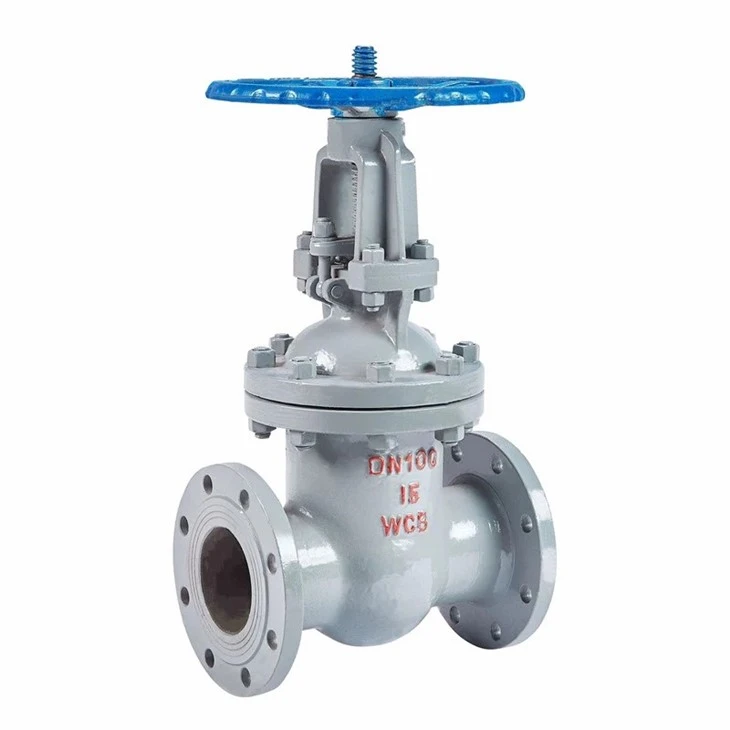
Precision Machined Stem:
Manufactured in a dedicated CNC stem facility to ensure exact thread tolerances, smooth operation, and extended packing life.

Hard-Faced Seats:
Body seat rings are precision machined and can be hardfaced with cobalt-base alloys (e.g., Stellite) to prevent galling, erosion, and wear.
Quality Control & Testing Sequence
Material Control:
Material Test Reports (MTR) according to EN 10204 3.1 are tracked for all pressure-containing castings.
Precision Machining:
Critical dimensions (flange faces, stem threads, and seat pockets) are verified against approved drawings.
Dedicated Stem Processing:
Stem surface finish and concentricity are controlled to reduce operating torque.
Pressure Testing:
100% of finished valves undergo hydrostatic shell testing, high-pressure seat testing, and low-pressure air seat testing per API 598.
Manufacturing Evidence Available Upon Request:
General Assembly Drawing (GAD) & Cross-Sectional Data
01
Material Test Reports (MTR / EN 10204 3.1)
02
Hydrostatic & Pressure Test Certificates
03
Non-Destructive Testing (NDT) Reports (RT, UT, MT, PT where specified)
04
ISO 9001 System Documentation & Inspection and Test Plan (ITP)
05
Oil & Gas Pipelines: Mainline transmission and manifold isolation.
Refining & Petrochemical Processing: Hydrocarbon process line shutoff.
Power Generation & Utilities: Steam isolation and boiler feed water lines.
Chemical Processing: Industrial fluid handling and utility stream control.
Industrial Water & Mining: Heavy-duty water transport and slurry lines.
Selection Guidelines
Select a Cast Steel Gate Valve when:
Full-bore flow with minimal pressure drop is required.
Positive bidirectional isolation is needed.
Operating temperatures or pressures require a metallic body structure.
Consider Alternative Valves when:
Continuous flow regulation is required (Use a Globe Valve).
Quick quarter-turn operation is necessary (Use a Ball or Butterfly Valve).
Space constraints prevent the installation of a full-size gate valve.
FAQ
We're well-known as one of the leading cast steel gate valve manufacturers and suppliers in China. Please feel free to buy high quality cast steel gate valve at competitive price from our factory. For more information, contact us now.
Popular Products