High Pressure Gate Valve
High pressure gate valve is an industrial isolation valve engineered to shut off flow in high-pressure piping systems. The gate moves vertically relative to the flow path and operates in the fully open or fully closed position.
When fully open, the gate is removed from the flow passage, delivering minimal pressure drop and low flow resistance. This valve is designed strictly for isolation service and is not recommended for continuous throttling.
-
![High Pressure Petrochemical Isolation Gate Valve]() High Pressure Petrochemical Isolation Gate ValveThe high pressure petrochemical isolation gate valve is engineered for positive bidirectional line isolation across petroleum refining, petrochemical processing, chemical production, and oil and gas
-
![High Pressure Steam Gate Valve]() High Pressure Steam Gate ValveDesigned for zero-leakage isolation in critical high-temperature, high-pressure steam systems across power plants, refineries, and chemical processing facilities. Engineered in strict compliance with
-
![Forged Steel High Pressure Gate Valve]() Forged Steel High Pressure Gate ValveForged steel high pressure gate valves provide positive isolation in demanding industrial piping systems. The gate moves perpendicular to the process flow, ensuring dependable shutoff when fully
-
![Class 2500 Heavy Duty Pressure Seal Gate Valve]() Class 2500 Heavy Duty Pressure Seal Gate ValveThe class 2500 heavy duty pressure seal gate valve is engineered for high-pressure, elevated-temperature isolation service where pressure-boundary integrity and zero-leakage performance are critical.
-
![Class 1500 High Pressure Cast Steel Gate Valve]() Class 1500 High Pressure Cast Steel Gate ValveHigh pressure cast steel gate valve designed for isolation service in oil and gas, refining, petrochemical, power generation, and industrial process piping systems.This valve is specified for ASME
-
![Class 900 High Pressure Pressure Seal Gate Valve]() Class 900 High Pressure Pressure Seal Gate ValveIn high-pressure power generation and petrochemical systems, bolted-bonnet joints often suffer from bolt relaxation and thermal stress fatigue. The Class 900 Pressure-Seal Gate Valve addresses this


Key Features
High-Pressure Isolation:
Provides reliable zero-leakage or low-leakage shut-off in demanding piping applications.
01
Full-Bore Flow Design:
Ensures unobstructed flow and minimal pressure drop when fully open.
02
Corrosion & Wear Resistant Materials:
Offered in Carbon Steel, Stainless Steel, and Alloy Steels tailored to fluid properties.
03
Flexible Configurations:
Available in Rising Stem (OS&Y) and Non-Rising Stem; Metal-Seated (Stellite hard-faced) or Soft-Seated designs.
04
Complete QA Traceability:
Material Test Reports (MTRs per EN 10204 3.1) and pressure test certificates supplied with every order.
05
Technical Specifications
|
Parameter |
Specification & Standard Compliance |
|
Valve Type |
High Pressure Gate Valve |
|
Design Standards |
API 600, API 6D, ASME B16.34, ISO 10423 (API 6A) |
|
Primary Function |
Pipeline Isolation (On/Off Service) |
|
Nominal Size |
DN15 - DN1200 (NPS 1/2" - 48") |
|
Pressure Class |
Class 150 - Class 2500 (PN16 - PN420) |
|
Body Material |
WCB, LCB, CF8, CF8M, CF3M, WC6, WC9, Duplex Stainless Steel |
|
Trim Material |
API 600 Trim 1 to 18 (e.g., Stellite 6, F316, 13Cr) |
|
Sealing Surface |
Metal-to-Metal (Hard-faced with Stellite) or Soft Seat |
|
Stem Configuration |
Rising Stem (OS&Y) or Non-Rising Stem |
|
Bonnet Connection |
Bolted Bonnet (BB) or Pressure Seal Bonnet (PSB) |
|
End Connections |
Flanged (ASME B16.5 / B16.47), Butt-Weld (ASME B16.25), Socket-Weld |
|
Operation Method |
Handwheel, Bevel Gear, Electric Actuator, Pneumatic Actuator |
|
Operating Temp. |
-196 deg C to +600 deg C (subject to material selection) |
|
Testing Standards |
API 598, ISO 5208, EN 12266-1 |
|
Certification |
EN 10204 3.1 MTR, ISO 9001, CE/PED, SIL (upon request) |
Valve Design and Construction
Gate and Seat
In the fully open position, the gate is completely clear of the flow path. In the closed position, the gate and seat form the primary seal. For high-pressure, high-temperature, or erosive media, Stellite hard-faced metal seating is applied to enhance wear and erosion resistance.
Rising Stem (OS&Y)
The stem threads are positioned outside the valve body, preventing contact with process fluids and line contaminants. The rising stem provides direct visual confirmation of the valve position, though it requires vertical clearance for operation.
Non-Rising Stem
The stem stays inside the valve body, maintaining a constant overall height during operation. This compact footprint is ideal for underground installations, offshore platforms, or space-constrained areas.
Applications
Oil & Gas:
Wellhead manifolds, processing facilities, and trunk pipeline isolation (API 6D / API 6A).
Refining & Petrochemical:
Catalytic cracking, hydroprocessing, and hydrocarbon process isolation.
Power Generation:
Main steam lines, boiler feed-water systems, and turbine isolation.
Chemical Processing:
Corrosive fluid and solvent handling with specialized alloy bodies.
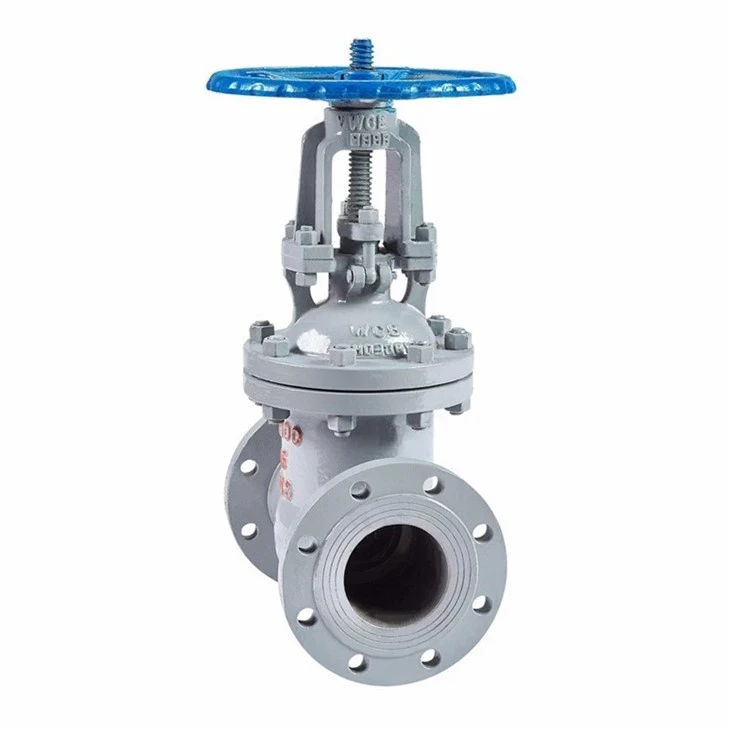
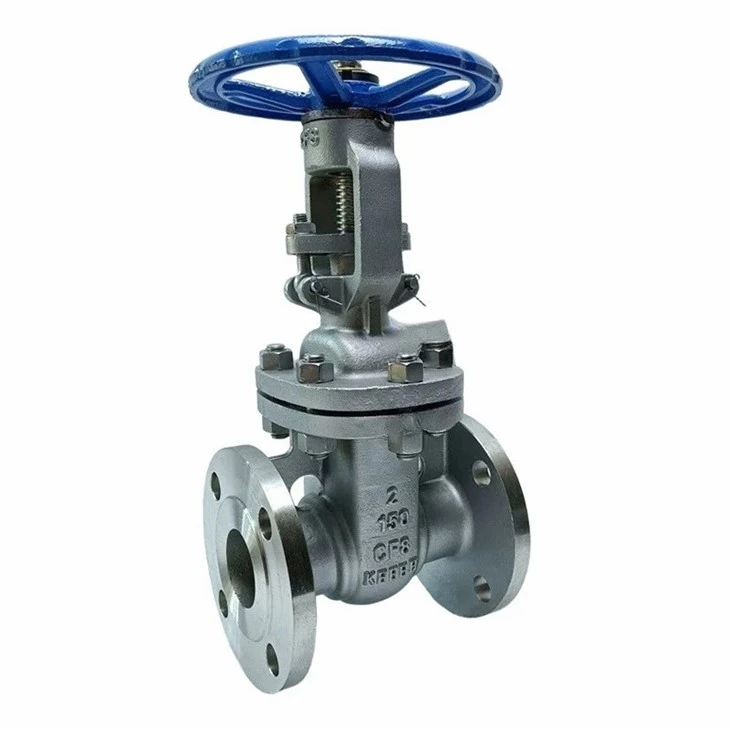
Material Verification & PMI: Spectro-analysis and Positive Material Identification (PMI) on raw castings and forgings against EN 10204 3.1 standards.
Precision Machining: CNC machining of bodies, stems, and gates to strict dimensional tolerances.
Lapping & Sealing Control: Precision lapping of gate and seat sealing faces to ensure fine surface finishes prior to assembly.
Pressure Testing:
Shell Hydrostatic Test: Executed at 1.5x rated working pressure.
High-Pressure Seat Test: Executed at 1.1x rated working pressure.
Low-Pressure Air Seat Test: Verified at 80 PSI (0.6 MPa) per API 598.
Final QA & Documentation: Verification of dimensions, flange finish, paint thickness, and final document compiling.
FAQ
We're well-known as one of the leading high pressure gate valve manufacturers and suppliers in China. Please feel free to buy high quality high pressure gate valve at competitive price from our factory. For more information, contact us now.
Popular Products