


In the realm of industrial valves, one-piece ball valves play a crucial role in various applications, especially in cryogenic environments. As a dedicated one-piece ball valve supplier, I have witnessed firsthand the unique challenges and special requirements that these valves must meet to ensure optimal performance in such extreme conditions.
Material Selection
One of the most critical aspects of a one-piece ball valve for cryogenic environments is the choice of materials. Cryogenic temperatures, typically defined as below -150°C (-238°F), can have a profound impact on the mechanical properties of materials. For instance, metals that are ductile at room temperature can become brittle and prone to cracking at cryogenic temperatures.
Stainless steel is a popular choice for cryogenic one-piece ball valves due to its excellent corrosion resistance and relatively good mechanical properties at low temperatures. Grades such as CF8, CF8M, and CF3M are commonly used. Stainless Steel Flanged Ball Valve CF8/CF8M/CF3M offers high strength and durability, making them suitable for handling cryogenic fluids. These grades also have low carbon content, which helps prevent carbide precipitation during welding and subsequent embrittlement at low temperatures.
Copper is another material option for one-piece ball valves in cryogenic applications. One Piece Copper Ball Valve has good thermal conductivity, which can help in maintaining a more uniform temperature distribution within the valve. Additionally, copper is relatively soft and can provide a good seal, even at low temperatures. However, copper may not be as strong as stainless steel, so it is often used in applications where the pressure is relatively low.

Design Considerations
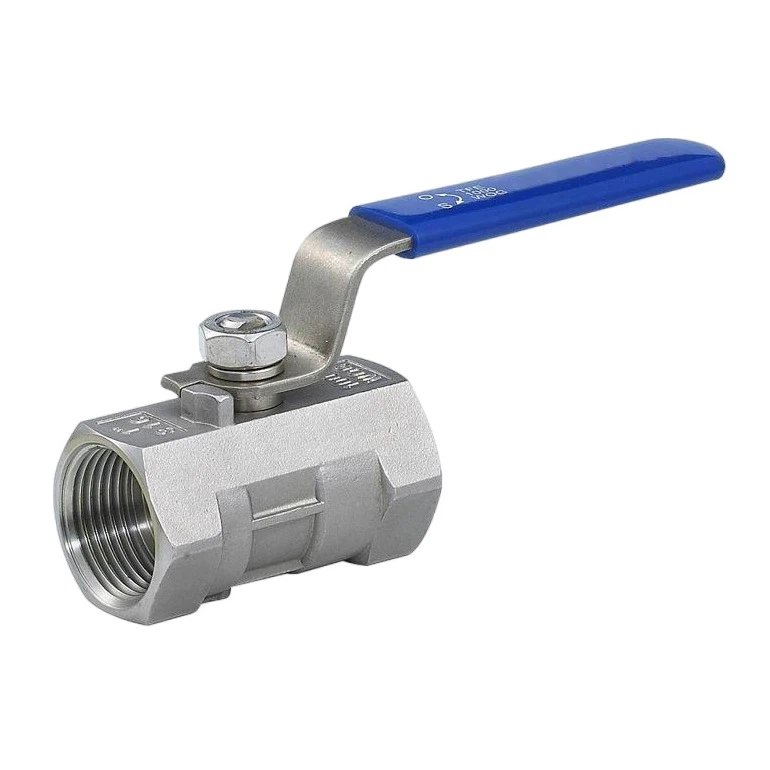
The design of a one-piece ball valve for cryogenic environments must take into account several factors to ensure reliable operation. First, the valve must be able to withstand the thermal stresses caused by the large temperature differences between the cryogenic fluid and the surrounding environment. This requires careful consideration of the valve's geometry and the use of materials with compatible thermal expansion coefficients.
For example, the valve body and ball should be designed to minimize the volume of trapped fluid, which can expand and cause excessive pressure buildup during warm-up. A well-designed valve will also have a low-friction ball and stem assembly to ensure smooth operation, even at low temperatures. This can be achieved through the use of special coatings or lubricants that are compatible with cryogenic fluids.
Another important design consideration is the sealing mechanism. Cryogenic fluids can cause rubber and other elastomeric materials to harden and lose their sealing properties. Therefore, one-piece ball valves for cryogenic applications often use metal-to-metal seals or special low-temperature elastomers. Metal-to-metal seals provide a reliable and long-lasting seal, but they may require more precise machining and alignment. Low-temperature elastomers, on the other hand, can provide a good seal at lower costs, but they need to be carefully selected to ensure compatibility with the cryogenic fluid and the operating temperature range.
Testing and Certification
To ensure the quality and reliability of one-piece ball valves for cryogenic environments, rigorous testing and certification are essential. Valves should be tested at cryogenic temperatures to verify their performance under actual operating conditions. This includes testing for leakage, flow capacity, and torque requirements.
Certification from recognized standards organizations, such as the American Society of Mechanical Engineers (ASME) and the International Organization for Standardization (ISO), is also important. These certifications ensure that the valves meet the highest quality and safety standards. For example, ASME B16.34 covers the design, materials, and testing requirements for valves used in cryogenic service.
Installation and Maintenance
Proper installation and maintenance are crucial for the long-term performance of one-piece ball valves in cryogenic environments. During installation, it is important to follow the manufacturer's instructions carefully to ensure correct alignment and tightening of the valve components. This helps prevent leakage and ensures smooth operation.
Regular maintenance is also necessary to keep the valve in good working condition. This includes inspecting the valve for signs of wear, corrosion, or damage, and replacing any worn or damaged parts as needed. Lubrication of the ball and stem assembly may also be required, depending on the type of valve and the operating conditions.
Conclusion
In conclusion, one-piece ball valves for cryogenic environments have special requirements that must be carefully considered to ensure reliable and efficient operation. From material selection to design, testing, installation, and maintenance, every aspect of the valve's lifecycle plays a crucial role in its performance. As a One-piece Ball Valve supplier, we are committed to providing high-quality valves that meet the unique needs of cryogenic applications.
If you are in need of one-piece ball valves for cryogenic environments, we invite you to contact us for more information and to discuss your specific requirements. Our team of experts is ready to assist you in selecting the right valve for your application and ensuring its proper installation and maintenance.
References
- ASME B16.34 - Valves - Flanged, Threaded, and Welding End
- ISO standards related to cryogenic valves
- Technical literature from valve manufacturers on cryogenic valve design and performance


