


Selecting the appropriate size of a one - piece ball valve is a critical decision that can significantly impact the efficiency, safety, and cost - effectiveness of your fluid control system. As a trusted one - piece ball valve supplier, I understand the challenges that customers face when making this choice. In this blog post, I will guide you through the key factors to consider when choosing the right size of a one - piece ball valve.
Understanding One - Piece Ball Valves
Before delving into the sizing process, it's essential to have a basic understanding of one - piece ball valves. A One - piece Ball Valve is a type of valve that consists of a single, solid body with a ball inside. The ball has a hole through its center, and when the valve is open, the hole aligns with the flow path, allowing fluid to pass through. When the valve is closed, the ball is rotated 90 degrees, blocking the flow.
One - piece ball valves are known for their simplicity, durability, and cost - effectiveness. They are commonly used in a wide range of applications, including residential plumbing, industrial processes, and HVAC systems.
Factors to Consider When Choosing the Size
Flow Rate Requirements
The flow rate is one of the most important factors to consider when choosing the size of a one - piece ball valve. The flow rate is the volume of fluid that passes through the valve per unit of time, typically measured in gallons per minute (GPM) or cubic meters per hour (m³/h).
To determine the required flow rate, you need to consider the specific application and the maximum flow that the system will experience. For example, in a residential plumbing system, the flow rate requirements for a kitchen sink will be different from those of a large industrial water supply line.
Once you have determined the required flow rate, you can use a flow coefficient (Cv) chart provided by the valve manufacturer. The Cv value represents the flow capacity of the valve, and it indicates the number of gallons per minute of water that will flow through the valve with a pressure drop of 1 psi. By matching the required flow rate with the Cv value of the valve, you can select the appropriate valve size.
Pressure Rating
The pressure rating of the one - piece ball valve is another crucial factor. The pressure rating indicates the maximum pressure that the valve can withstand without leaking or failing. It is typically measured in pounds per square inch (psi) or bars.
You need to consider the maximum operating pressure of your system when selecting the valve size. If the pressure in your system exceeds the pressure rating of the valve, it can lead to valve failure, which can be dangerous and costly. For high - pressure applications, such as in oil and gas pipelines, you may need to choose a larger - sized valve with a higher pressure rating.
Pipe Size
The size of the pipe in your system is directly related to the size of the one - piece ball valve you should choose. The valve size should match the pipe size to ensure a proper fit and to minimize pressure drop. If the valve is too small for the pipe, it can restrict the flow and cause excessive pressure drop, which can reduce the efficiency of the system. On the other hand, if the valve is too large for the pipe, it can be more expensive and may not provide the precise flow control required.
When selecting the valve size based on the pipe size, you should also consider the type of connection. One - piece ball valves are available with different types of connections, such as threaded, flanged, and welded. Make sure that the valve connection type is compatible with the pipe connection type. For example, if you have a Stainless Steel Flanged Ball Valve CF8/CF8M/CF3M, ensure that the flanges on the valve match the flanges on the pipe.
Temperature Range
The temperature of the fluid flowing through the valve is also an important consideration. Different materials used in one - piece ball valves have different temperature limits. For example, some plastic valves may not be suitable for high - temperature applications, while metal valves can generally withstand higher temperatures.
If your system operates at extreme temperatures, you need to choose a valve size and material that can handle those conditions. A larger valve may be required in high - temperature applications to ensure proper heat dissipation and to prevent damage to the valve components.
Application Type
The type of application also plays a role in determining the right valve size. For example, in a system where precise flow control is required, such as in a chemical dosing system, a smaller - sized valve may be more appropriate as it can provide more accurate control. In contrast, in a system where large volumes of fluid need to be transferred quickly, such as in a water supply system for a large building, a larger - sized valve may be necessary.
Comparing One - Piece Ball Valves with Other Types
It's also important to understand how one - piece ball valves compare with other types of ball valves, such as Three - piece Ball Valve. Three - piece ball valves consist of three separate pieces: two end caps and a center body. They are more expensive than one - piece ball valves but offer the advantage of easy maintenance and repair.
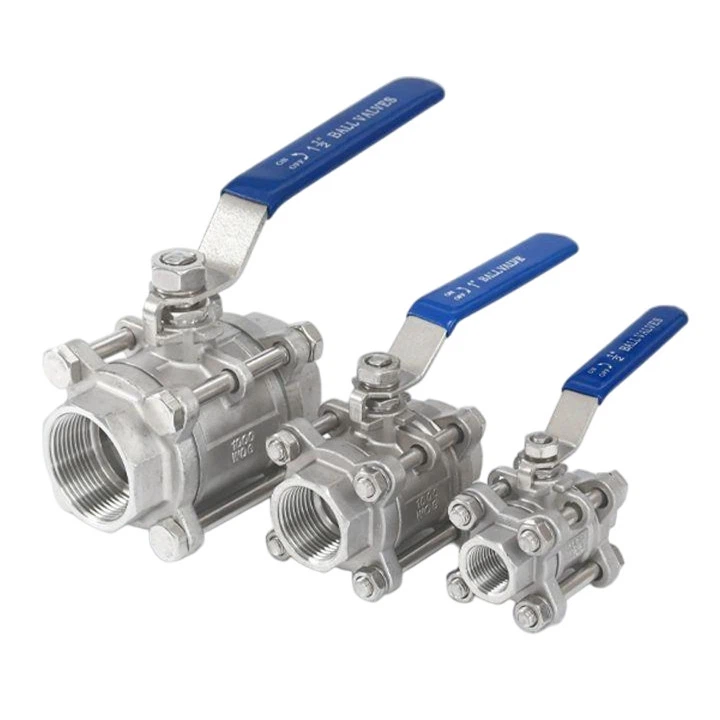

When choosing the size of a one - piece ball valve, you may need to consider whether a three - piece ball valve would be a better option for your application. If maintenance is a major concern, a three - piece ball valve might be more suitable, even though it may require a different sizing approach due to its different design.
Sizing Calculations and Tools
In addition to the factors mentioned above, there are also sizing calculations and tools available to help you choose the right size of a one - piece ball valve. Many valve manufacturers provide online sizing calculators that take into account factors such as flow rate, pressure, and temperature. These calculators can provide you with a recommended valve size based on the input data.
You can also consult with a professional engineer or a valve expert. They have the knowledge and experience to accurately assess your system requirements and recommend the most appropriate valve size.
Conclusion
Choosing the right size of a one - piece ball valve is a complex process that requires careful consideration of multiple factors, including flow rate, pressure rating, pipe size, temperature range, and application type. As a one - piece ball valve supplier, I am committed to helping you make the best decision for your fluid control system.
If you are still unsure about which size of one - piece ball valve is right for your application, or if you have any other questions regarding our products, please do not hesitate to contact us. Our team of experts is ready to assist you in the procurement process and ensure that you get the most suitable valve for your needs.
References
- Valve Handbook, by J. S. Beranek
- Fluid Mechanics for Engineers, by R. W. Fox and A. T. McDonald
- Industrial Valves: Selection, Specification, and Sizing, by R. A. Streeter and E. B. Wylie


