


Hey there! As a ball valve supplier, I often get asked, "When should I choose a high - performance ball valve?" Well, let's dive right into it and break down the situations where a high - performance ball valve is the way to go.
Understanding High - Performance Ball Valves
First off, what exactly are high - performance ball valves? These are valves designed to handle more demanding applications compared to standard ones. They're built to withstand high pressures, high temperatures, and corrosive environments. They usually have better sealing capabilities and can offer more precise flow control.
High - Pressure Applications
One of the most obvious scenarios where you'd want a high - performance ball valve is in high - pressure systems. In industries like oil and gas, chemical processing, and power generation, pressures can reach extremely high levels. Standard ball valves might not be able to handle these pressures without leaking or failing.
For example, in an oil refinery, the pipelines carry crude oil and refined products at high pressures. A high - performance ball valve can ensure a tight seal even under these extreme conditions. It's made from high - strength materials like stainless steel or alloy steel, which can resist the force exerted by the high - pressure fluids. If you use a regular valve in such a situation, it could lead to leaks, which are not only dangerous but also costly in terms of lost product and potential environmental damage.
High - Temperature Environments
High - performance ball valves are also a must in high - temperature applications. In industries such as metal smelting, glass manufacturing, and some chemical processes, temperatures can soar. Standard valves may warp or lose their sealing properties at high temperatures.
Let's say you're running a glass factory. The molten glass is extremely hot, and you need to control its flow through the pipes. A high - performance ball valve can handle the high temperatures without deforming. These valves are often equipped with special seals and materials that can withstand the heat. For instance, some high - performance ball valves use graphite seals, which have excellent heat resistance.
Corrosive Fluids
When dealing with corrosive fluids, high - performance ball valves are your best bet. In chemical plants, wastewater treatment facilities, and the food and beverage industry, there are many corrosive substances like acids, alkalis, and salts. Regular ball valves can be quickly corroded by these fluids, leading to valve failure.
High - performance ball valves are made from corrosion - resistant materials. For example, some are coated with materials like PTFE (polytetrafluoroethylene), which is highly resistant to a wide range of chemicals. This coating protects the valve body and internal components from corrosion, ensuring a long service life.
Precise Flow Control
In some applications, precise flow control is crucial. Industries like pharmaceutical manufacturing, semiconductor production, and some research laboratories require accurate regulation of fluid flow. High - performance ball valves can offer better flow control compared to standard ones.
They often have a more refined design and better - engineered ball and seat combinations. This allows for more accurate adjustment of the flow rate. For example, in a pharmaceutical manufacturing process, the exact amount of a chemical reagent needs to be added at a specific time. A high - performance ball valve can be adjusted precisely to achieve this level of control.
Types of Ball Valves and Their Suitability
Now, let's talk about different types of ball valves and when they might be the right choice in high - performance situations.
One - piece Ball Valve
The One - piece Ball Valve is a simple and cost - effective option. It's a single, solid unit, which makes it very durable. However, it's not as easy to repair or maintain as other types. It's suitable for applications where the flow is relatively stable, and the valve doesn't need to be frequently opened and closed. For example, in a small - scale water supply system where the pressure and flow are consistent, a one - piece ball valve can work well.
Two - piece Ball Valve
The Two - piece Ball Valve offers a good balance between durability and maintainability. It consists of two parts that can be separated, making it easier to access the internal components for cleaning or replacement. This type of valve is often used in medium - sized industrial applications where there may be occasional maintenance requirements. For instance, in a small - to - medium - sized chemical processing plant, a two - piece ball valve can handle the flow of various chemicals while still being relatively easy to service.
Three - piece Ball Valve
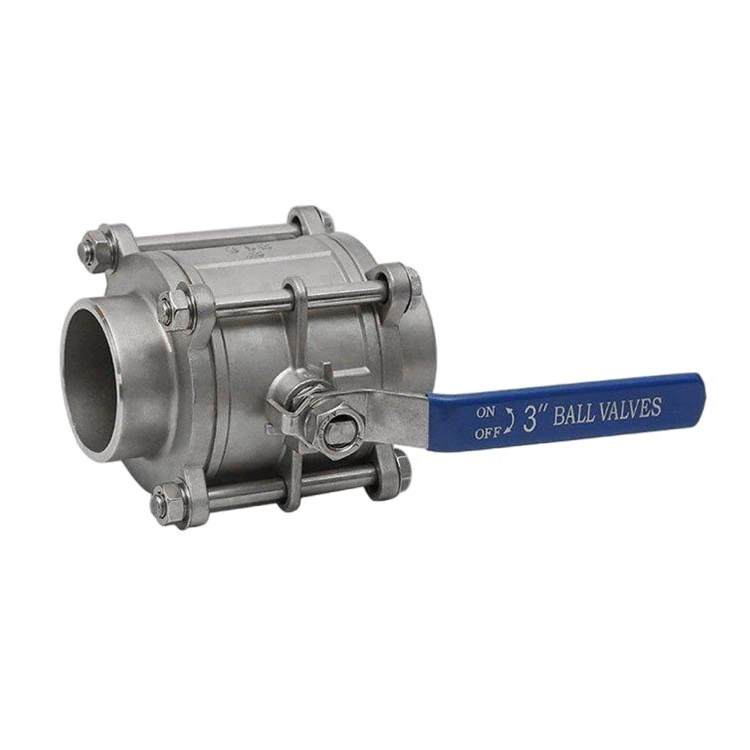
The Three - piece Ball Valve is the most versatile and easy - to - maintain option. It has three parts, and the middle section can be easily removed without disturbing the pipeline connections. This makes it ideal for applications where frequent maintenance or replacement of internal components is required. In large - scale industrial plants, especially those with complex fluid systems, three - piece ball valves are often the preferred choice.
Cost Considerations
Of course, high - performance ball valves are generally more expensive than standard ones. But it's important to consider the long - term costs. A high - performance valve may have a higher upfront cost, but it can save you money in the long run. It has a longer service life, reduces the risk of leaks and failures, and requires less frequent maintenance.
For example, if you choose a cheap, standard valve for a high - pressure application, you may end up having to replace it frequently due to leaks or failures. This not only costs you money in terms of new valves but also in labor costs for installation and potential downtime of your operations. On the other hand, a high - performance ball valve can operate reliably for a long time, minimizing these costs.
Making the Right Choice
So, when you're deciding whether to choose a high - performance ball valve, consider the following factors:
- Operating conditions: Assess the pressure, temperature, and the nature of the fluid (corrosive or not). If the conditions are extreme, a high - performance valve is likely necessary.
- Flow control requirements: If you need precise control of the fluid flow, a high - performance valve can offer better accuracy.
- Maintenance needs: Think about how easy it will be to maintain the valve. If regular maintenance is required, a two - piece or three - piece ball valve may be a better choice.
- Budget: While high - performance valves are more expensive upfront, consider the long - term savings in terms of reduced maintenance and downtime.
If you're still not sure whether a high - performance ball valve is right for your application, don't hesitate to reach out. As a ball valve supplier, I have the expertise to help you make the best choice. We can discuss your specific requirements in detail and recommend the most suitable valve for your needs. Whether you're in a small - scale business or a large industrial operation, we've got the right solutions for you. So, if you're looking to purchase ball valves, let's start a conversation and see how we can work together to meet your valve needs.

References
- "Valve Handbook: Principles and Applications" by J. T. R. Hughes
- "Industrial Valves: Selection, Specification, and Installation" by Thomas McKetta


