


Hey there! As a supplier of Three-piece Ball Valves, I've been in the valve game for quite a while. And let me tell you, there are some key standards that a top-notch three-piece ball valve should meet. In this blog, I'm gonna break down these standards so you can make an informed decision when it comes to choosing the right valve for your needs.
Material Quality
First off, the materials used in a three-piece ball valve are super important. The valve body, ball, stem, and seats all need to be made from high-quality materials that can withstand the conditions they'll be exposed to.
For the valve body, stainless steel is a popular choice. It's corrosion-resistant, durable, and can handle a wide range of temperatures and pressures. Carbon steel is another option, which is strong and cost-effective but may require additional protection against corrosion in certain environments.
The ball inside the valve is typically made from stainless steel or brass. Stainless steel balls are great for high-pressure and high-temperature applications, while brass balls are often used in less demanding situations. The stem, which connects the ball to the actuator, also needs to be made from a strong and corrosion-resistant material to ensure smooth operation.
The seats of the valve are what create a seal between the ball and the valve body. They're usually made from materials like PTFE (polytetrafluoroethylene) or NBR (nitrile butadiene rubber). PTFE seats are known for their excellent chemical resistance and low friction, while NBR seats are more flexible and can provide a better seal in some applications.
Pressure and Temperature Ratings
Another crucial standard for a three-piece ball valve is its pressure and temperature ratings. These ratings indicate the maximum pressure and temperature that the valve can safely handle without failing.
When choosing a valve, it's important to make sure that its pressure and temperature ratings are suitable for your application. If you're using the valve in a high-pressure or high-temperature environment, you'll need a valve with a higher rating. On the other hand, if the pressure and temperature are relatively low, you can choose a valve with a lower rating to save costs.
Most three-piece ball valves come with a pressure rating in PSI (pounds per square inch) and a temperature rating in degrees Fahrenheit or Celsius. Make sure to check these ratings carefully and choose a valve that can handle the conditions in your system.
Flow Capacity
The flow capacity of a three-piece ball valve is also an important consideration. It refers to the amount of fluid or gas that the valve can allow to pass through it per unit of time.
The flow capacity of a valve is determined by its size, the size of the ball, and the design of the valve. A larger valve with a larger ball will generally have a higher flow capacity than a smaller valve. However, it's important to note that the flow capacity also depends on the pressure drop across the valve. A valve with a high pressure drop will have a lower flow capacity, even if it's a large valve.

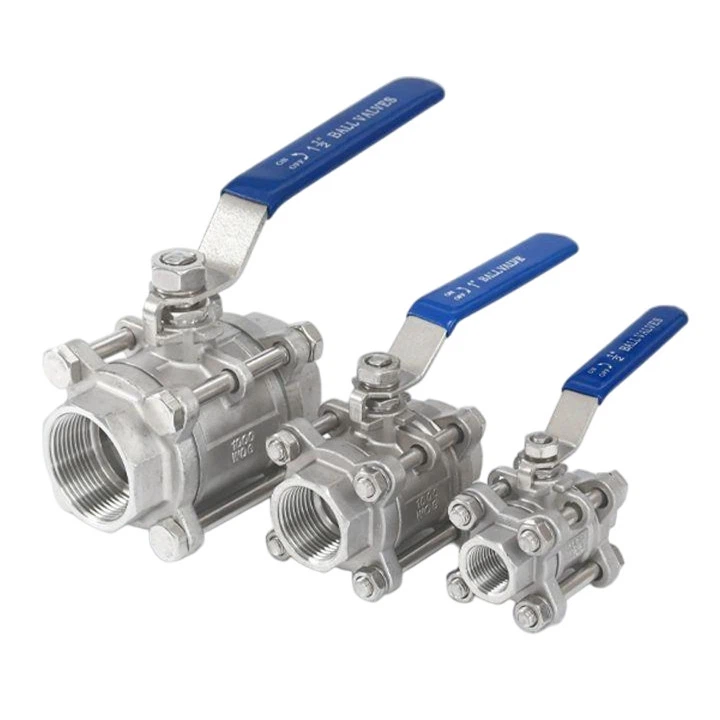
When choosing a valve, you need to consider the flow requirements of your system. Make sure to choose a valve with a flow capacity that is sufficient for your needs. You can also consult with a valve expert to determine the right size and type of valve for your application.
Leakage Rate
The leakage rate of a three-piece ball valve is a measure of how much fluid or gas can escape from the valve when it's closed. A low leakage rate is important to ensure the efficiency and safety of your system.
There are different standards for leakage rates depending on the application. In some industries, such as the oil and gas industry, a very low leakage rate is required to prevent environmental pollution and ensure the safety of workers. In other industries, a slightly higher leakage rate may be acceptable.
Most three-piece ball valves are designed to have a low leakage rate. However, it's important to choose a valve from a reputable manufacturer that uses high-quality materials and advanced manufacturing processes to ensure a reliable seal. You can also look for valves that are tested and certified to meet specific leakage rate standards.
End Connections
The end connections of a three-piece ball valve are how it's connected to the pipes or other components in your system. There are several different types of end connections available, including threaded, flanged, and welded connections.
Threaded connections are the most common type of end connection for small valves. They're easy to install and remove, but they may not be suitable for high-pressure or high-temperature applications. Flanged connections are more common for larger valves. They provide a more secure and leak-proof connection, but they're also more expensive and require more space. Welded connections are used in applications where a permanent and leak-proof connection is required.
When choosing a valve, you need to consider the type of end connections that are compatible with your system. Make sure to choose a valve with the right type and size of end connections to ensure a proper fit.
Actuation
Three-piece ball valves can be actuated manually or automatically. Manual valves are operated by a handle or a lever, while automatic valves are operated by an actuator, such as an electric, pneumatic, or hydraulic actuator.
Manual valves are simple and cost-effective, but they're not suitable for applications where frequent or remote operation is required. Automatic valves, on the other hand, can be controlled remotely and can be programmed to open and close at specific times or in response to certain conditions.
When choosing a valve, you need to consider the type of actuation that is most suitable for your application. If you need to operate the valve frequently or remotely, an automatic valve may be a better choice. However, if you only need to operate the valve occasionally, a manual valve may be sufficient.
Comparison with Other Types of Ball Valves
Now, let's take a quick look at how three-piece ball valves compare with other types of ball valves, such as One-piece Ball Valve and Two-piece Ball Valve.
One-piece ball valves are the simplest and most cost-effective type of ball valve. They're made from a single piece of material and are usually not repairable. They're suitable for applications where the valve doesn't need to be disassembled for maintenance or repair.
Two-piece ball valves are more versatile than one-piece ball valves. They're made from two pieces that can be easily disassembled for maintenance and repair. They're also more expensive than one-piece ball valves, but they offer better performance and reliability.
Three-piece ball valves are the most versatile and reliable type of ball valve. They're made from three pieces that can be easily disassembled for maintenance, repair, or replacement of parts. They're also more expensive than one-piece and two-piece ball valves, but they offer the best performance and reliability in high-pressure and high-temperature applications.
Conclusion
In conclusion, a high-quality three-piece ball valve should meet several key standards, including material quality, pressure and temperature ratings, flow capacity, leakage rate, end connections, and actuation. By choosing a valve that meets these standards, you can ensure the efficiency, safety, and reliability of your system.
If you're in the market for a three-piece ball valve, I encourage you to check out our Three-piece Ball Valve products. We're a leading supplier of high-quality valves, and we use the latest technology and manufacturing processes to ensure that our valves meet the highest standards of quality and performance.
If you have any questions or need help choosing the right valve for your application, please don't hesitate to contact us. We have a team of valve experts who can provide you with the information and support you need. We look forward to working with you and helping you find the perfect valve for your needs.
References
- Valve Handbook, 4th Edition, by J. S. Tuzson
- Ball Valves: Selection, Installation, and Maintenance, by R. A. Smith
- Standards for Ball Valves, published by the American National Standards Institute (ANSI)


